Monday, 20 April 2015

Works Cited

Works Cited

Primary


Carvajal y Mendoza, Luisa.“Letter to Father Joseph Creswell, S.J.” in This Tight Embrace: Luisa de Carvajal y Mendoza (1566-1614). (Milwaukee: Marquette Univ. Press, 2000): 265-273.

De Cordoba, Leonor Lopez,Translators Amy Katz Kaminsky and Elaine Dorough Johnson. “Autobiografia. Autobiography” in Water Lilies/Flores de Agua: An Anthology of Spanish Women Writers from the Fifteenth through the Nineteenth Century. (Minneapolis: University of Minnesota Press, 1996): 19-32.

Teresa of Avila, Translator David Lewis. The Life of St. Teresa of Jesus, of the Order of Our Lady of Carmel. (Charlotte: Tan Books, 1997).


Secondary

Katz Kaminsky, Amy and Elaine Dorough Johnson. “To Restore Honor and Fortune: The Autobiography of Leonor Lopez de Cordoba” in The Female Autograph ed. Donna D. Stanton and Jeanine Parisier Plottel. (New York: New York Literary Forum, 1984): 70-80.

Mitterauer, Michael and Reinhard Sieder. The European Family. (Chicago: University of Chicago Press, 1983).

Rhodes, Elizabeth. “Luisa de Carvajal's Counter-Reformation Journey to Selfhood (1566-1614).” Renaissance Quarterly 51, no.3 (1998): 887-911.

Rowe, Erin Kathleen. “St. Teresa and Olivares: Patron Sainthood, Royal Favourites, and the Politics of Plurality in Seventeenth-Century Spain.” The Sixteenth Century Journal 37, no. 3 (2006): 721- 737.

Images

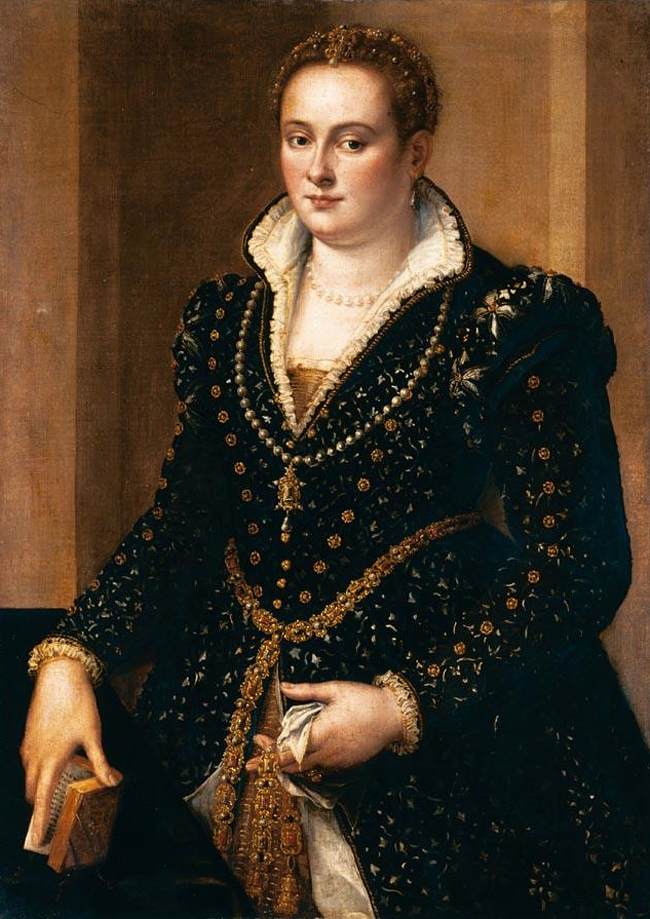
Allori, Alessandro. “Portrait of a Noblewoman.” Web Gallery of Art.

Della, Filippo. “St. Therese of Avila.” Web Gallery of Art.

Fontana, Lavinia. “Family Portrait.” Web Gallery of Art.

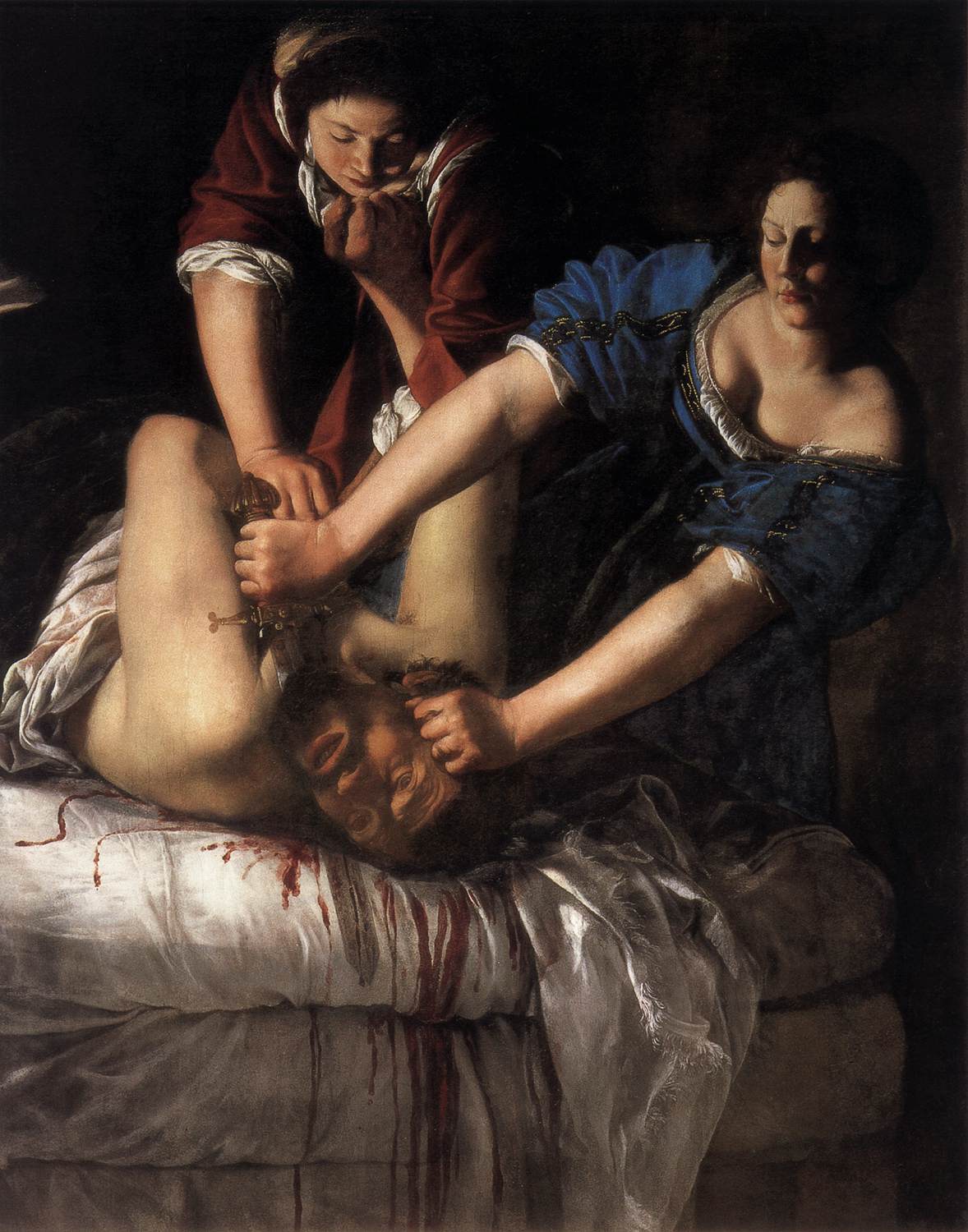
Gentileschi, Artemesia. “Judith Slaying Holofernes.” Web Gallery of Art

Painting of Luisa de Carvajal y Mendoza.” Women in European History: https://womenineuropeanhistory.wordpress.com/2014/05/01/luisa-de-carvajal-y-mendoza-in- gods-pursuit-2/



Conclusion: What does it all mean?


(Judith Slaying Holofernes by Artemesia Gentileschi. This painting may seem graphic, but it shows a woman acting independently and taking action. A woman acting with agency.)

 During the Early Modern Period in Spain, a women was often given two choices on how to live her life: she could either marry and care for her husband's home, or she enter a convent and live as a nun. At least, this was the theoretical way in which society was supposed to operate, but reality shows us that this wasn't always the case. Even if a women did choose to be a wife she could still act on her own, independent of her husband and she chose to be a nun she could still act with agency and make her own decisions.
This is clearly exemplified by the three autobiographies that were looked at in this blog. Leonor Lopez de Cordoba came from a wealthy noble family, yet after her period of imprisonment was able to act independent of her husband and father and manage her own property. She was also not restricted to the domestic sphere and was active in court at one point in her life. Both Teresa of Avila and Luisa Carvajal y Mendoza chose the life of a nun, but didn't simply spend their lives in a convent, they sought reform within their order and to spread their religion to a different part of Europe. All three women were able to act independently and ultimately choose how they lived their lives.
Religion played a large role in all of their lives, even Leonor, who did not live as a nun. In her case, she starts out her memoirs by swearing to God that everything she writes is true. It is clear that the Roman Catholic religion has an effect on almost all aspects of life in Early Modern Spain, even if one is not a member of a religious order. Of course religion also played enormous roles in the lives of Teresa and Luisa, both of whom devoted their lives to God. In Teresa's case, her steadfast belief in this higher power shaped her world views and led her to develop a form of Christian mysticism. In the case of Luisa, religion is the driving force behind her major decision to travel to England. She even states that she was seeking martyrdom, which is not a goal one would pursue if they did not have an extremely strong faith. Part of the reason that Catholicism plays a bigger role in the latter two bibliographies is because they were written during a period known by some scholars as the Catholic Reformation. This movement was not only a reaction to the development of Protestantism in Northern Europe, but also a response to the changing social climate in Roman Catholic countries.
Now that we have discussed the autobiographies of three very different women who lived during the Early Modern Period in Spain, we can use the information we have gathered and apply it to our modern gender equality debate. We learned that women and men theoretically had different roles in society, but in practice there was much more overlap. It wasn't just men owning property, going on missions, or working for reform. Women could do these things as well and our sources show that they did. This emphasizes the vast difference between how women were theoretically supposed to be living and how they actually did.
By knowing this we can determine that gender differences in our modern society aren't simply products of the last few centuries and have their roots in a much earlier time. By studying this topic further and broadening the time period one looks at, it would be possible to create an even broad image of how women were perceived and how they acted throughout history. Studying women in Early Modern Europe is simply one piece of this multidisciplinary puzzle.  

Woman of the Mission: Luisa Carvajal y Mendoza


(A painting of Luisa in prayer.)

 Luisa Carvajal y Mendoza was a noblewoman born in Spain in 1566. Much like Teresa of Avila, she lived a life devoted to the church, but her experiences and the way she wrote her autobiography was very different. She lived her life as a religious poet and writer, but also made the very unorthodox decision to travel to England in an attempt to convert them to Catholicism.
While Luisa's writings don't take the form of a full autobiography, but she wrote many letters and documents outlining the events of her life. One of these letters was written to Father Joseph Creswell while she was on her mission in England. The letter discusses how the area of town she was staying in strongly disproved of the pope and Roman Catholicism so she was forced to be very careful when walking the streets. Even with her caution, she was still surrounded by Englishmen who brought her and two of her companions to a judge. Luisa told the judge who she was, where she was, what her beliefs were, and that she would be willing to die for them.
Luisa's choice to travel to London on a mission was very unique and different from what many other unmarried women did. She was clearly motivated by religion and to some degree even sought to me a martyr. Even though she aims to live a pious life, her writings takes a much different from those of Teresa of Avila. She does make frequent reference to God in her letter, but she does not allow for large asides discussing her specific religious beliefs and practices. Even though both her and Teresa lived very religious lives, Luisa's decision to travel to London really sets her apart from other women who chose the life of a nun.

By making this unorthodox decision she is exercising a certain degree of agency, which goes slightly against the societal assumption that a nun was to live a passive life in the convent. Furthermore, she is able to represent herself legally and not have to rely upon a man to speak for her in court. Not only is able to do this, but according to her her letter she speaks in a very blunt, confident voice in front of the male judge. Ultimately Luisa Carvajal y Mendoza lived the life of a nun that the theory of the time suggested she should, but she was able to be assertive and act with agency at the same time.

Woman of the Convent: Teresa of Avila


( St. Therese of Avila by Filippo Della. This marble carving of Teresa of Avila was created after she canonized as a Saint)

Teresa of Avila, or St. Teresa of Jesus as she would lately be called, was a Christian mystic from Spain who lived during the sixteenth century. Her autobiography is quite different from the other two discussed in this blog, primarily owing to her large discussion of her religious beliefs and practices.
She begins her autobiography with tales of her childhood and discusses having pious parents who influenced her choices later in life. The death of her mother in 1530 had a very strong effect on her and she claims that it was what made her want to live a “good” life. Without a mother to raise her, she was placed in an Augustinian order. She later became a Carmelite and after surviving a terrible illness that stopped her from walking began to see visions sent to her from Jesus Christ. It was at this point when she became a Christian mystic and began to spread her ideas of prayer and share her visions. She sought to reform the Carmelite orders with these beliefs. She finishes her autobiography with a discussion of her visions and how others can see God.
While Teresa's father was a lesser noble, her family's position was very different than that of Leonor Lopez de Cordoba. Her father was a Jewish man who had converted to Christianity and had purchased a knighthood, instead of inheriting his title. As a result, Teresa didn't spend a large portion of her autobiography outlining her heritage and her social status had less of an effect on her life than Leonor's had on hers.
Teresa's religion obviously played a large role in her autobiography as well. She began by discussing her pious parents and then spent the rest of her life as a nun, so religion was always the focus in her life. This is clearly exemplified in her writing as more time is spent discussing visions and her interpretation of what it means to be a close to God is discussed alongside every life event she recounts, such as how her paralysis was cured by St. Joseph. Religion was an enormous part of most people's lives during the Early Modern Period, and Teresa clearly shows how influential the Roman Catholic Church can be on its followers.

Her gender does play a role in her life, but in a much different way than the other two autobiographers. She lived a majority of her life as a nun and of course she would not have been able to do that if she was not a female. It also partially inhibited her ability to spread her ideas, for example she was able implement her reforms in the female Carmelite order much earlier than she was able to reach male orders. The way she lived her life is very much in line with the theory of how a woman should live. Women were supposed to either marry a man or become a nun and Teresa is very much at one side of this choice, not in the middle like many other women are in practice.  

Woman of the Court: Leonor Lopez de Cordoba

 
(Family Portrait by Lavinia Fontana. This piece was painted by a female artist and shows a noble family)

 Leonor Lopez de Cordoba was not only the author of the first Spanish autobiography, but also the first woman to claim authorship of any Spanish document. In her work, simply titled Memorias, which translates to memoirs, she discussed her life as a noblewoman, beginning with her life as a child imprisoned for her familial ties and ending her tale with banishment to Cordoba.
She begins her autobiography by swearing on God's name that everything she writes is true. She then very clearly outlines her lineage and her noble ties. The story itself begins with her family losing their political power after the murder of Pedro I of Castile, who was a relative of Leonor's mother. As a result of this, a number of Pedro's family members are imprisoned in 1371. They spent eight years in prison before they were released, but at that time everyone had passed away except for Leonor and her husband. With no property or possessions of their own, they travel to Leonor's aunt's house in Cordoba, where she stays for several years while her husband travels through Iberia. After spending time in a property granted to her by her aunt, she returns to the courts of Castile and serves as an advisor. Unfortunately for Leonora, she was banished from court by the queen and returns to Cordoba in 1412, where she ends her autobiography.
Leonor's noble status plays a very strange role in her life. It is because of her aristocratic ties that she is able to own her own property and have a presence at court, but it also led to her imprisonment for several years. Possibly owing to her noble ties, she places a lot of value on property. Almost instantly upon leaving prison, her husband begins searching for a way to regain her property. Prior to his search, he is frequently mentioned in Leonor's memoirs, but once he returns empty handed his presence is suddenly absent. Upon coming to terms with the reality that she will have to find wealth and land elsewhere, she manages to talk her aunt into buying a piece of property for her.
While her aunt plays a large role in her autobiography simply owing to the fact that Lenora both lived with her and received property from her, most of the individuals she discusses are male. Whether it be her husband, her father, or the king she makes frequent reference to the members of male nobility that she interacts with. During the Early Modern Period, unless a woman was a widow, her husband or father was legally in control of her, which explains this emphasis. This does begin to change slightly in the second half of her memoir after her brother and father have passed away and her husband has lost all of her possessions. In the second half of Leonor’s memoir, after being released from prison we see that she shifts to discussing females. This is most likely because her aunt is her primary care taker. Both Leonor and her aunt show a surprising amount of agency in latter half of the autobiography. They are both able to own property and manage it without the presence of a male figure.

Ultimately Leonor's autobiography tells us a lot about how noble women lived during the Early Modern Period. Even though the courts were dominated by male figures, women were still able to own their own property and act independently. Her story also shows us the separation between theory and practice; in theory women weren't able to act independently of a man, but in practice both Leonor and her aunt prove this to be false.

Introduction - Why read Historical Autobiographies?

 (Portrait of a Noblewoman by Alessandro Allori. This painting shows an upper class women wearing fine clothing)

 It is clear in our modern society that men and women are not seen as equal. Whether it be how women only make up 4.8% of Fortune 500 CEOs or simply that a man walking down the street while wearing a dress would likely get strange looks from people passing by, it is evident that we view males and females as distinct from one another. There are many individuals, whether they consider themselves feminist or not, who seek to determine why this gender inequality exists and determine how they can change it. One technique they are using in order to reach their goals is that of academic research; anthropologists, sociologists, political scientists, psychologists, historians and scholars in other disciplines are all able to contribute useful knowledge to the gender equality debate.
Some might find it odd that history is included in the list of disciplines that are able to contribute to a contemporary issue, but one of the most important abilities possessed by successful historians is the ability to understand that nothing simply occurs by happenstance. Historical research can tell us a considerable amount of why the present has developed into what we see today, which can in turn be used to understand contemporary issues and determine the best manner in which to approach them.
Even the history of women from across the Atlantic Ocean who lived over five hundred years ago can give us information about why gender is constructed the way it is in modern North America. There is an incredibly diverse variety of primary historical documents and secondary scholarly research available, all of which are able to help us understand the present. A large majority of documents written during the Early Modern Period ( this time period is often considered to be 1300-1800) were authored by men, even if they were writing about topics concerning women. Though it was not common, some women did actually write autobiographies and record accounts of events they witnessed or took part in. The autobiographies of women can be very interesting tools when conducting historical research as they act to explain to readers how the authors interacted with the world they lived in and the emotions they felt when doing so. Autobiographies act as the personal history of individual writers.
Though it must be acknowledged that autobiographies are not a “flawless” source. While they do allow us to to see the world from the eyes of the author, one must always read them understanding that the events described may not be one hundred percent accurate. Even if the events being written about actually occurred, there is always the potential that the author has embellished their tale in order to make it more interesting. That being said, they are still incredibly value and the insight they give us into how people saw the world in crucial to understanding how society was constructed during a different time.
This blog will be focused on three biographies written by Spanish women between the fourteenth and seventeenth centuries. The first will be Leonor Lopez de Cordoba, a Spanish noblewoman who was banished from the courts of Castille, the second is Teresa of Avila, a mystic who was canonized by the Roman Catholic Church, and the last autobiography is written by Luisa Carvajal y Mendoza, a noble who participated in a mission to England.